
Is Gaming Losing Its Soul?
- Admin
- Feb 24
- 2 min read
Why Owning a Game Felt Different Than Accessing One
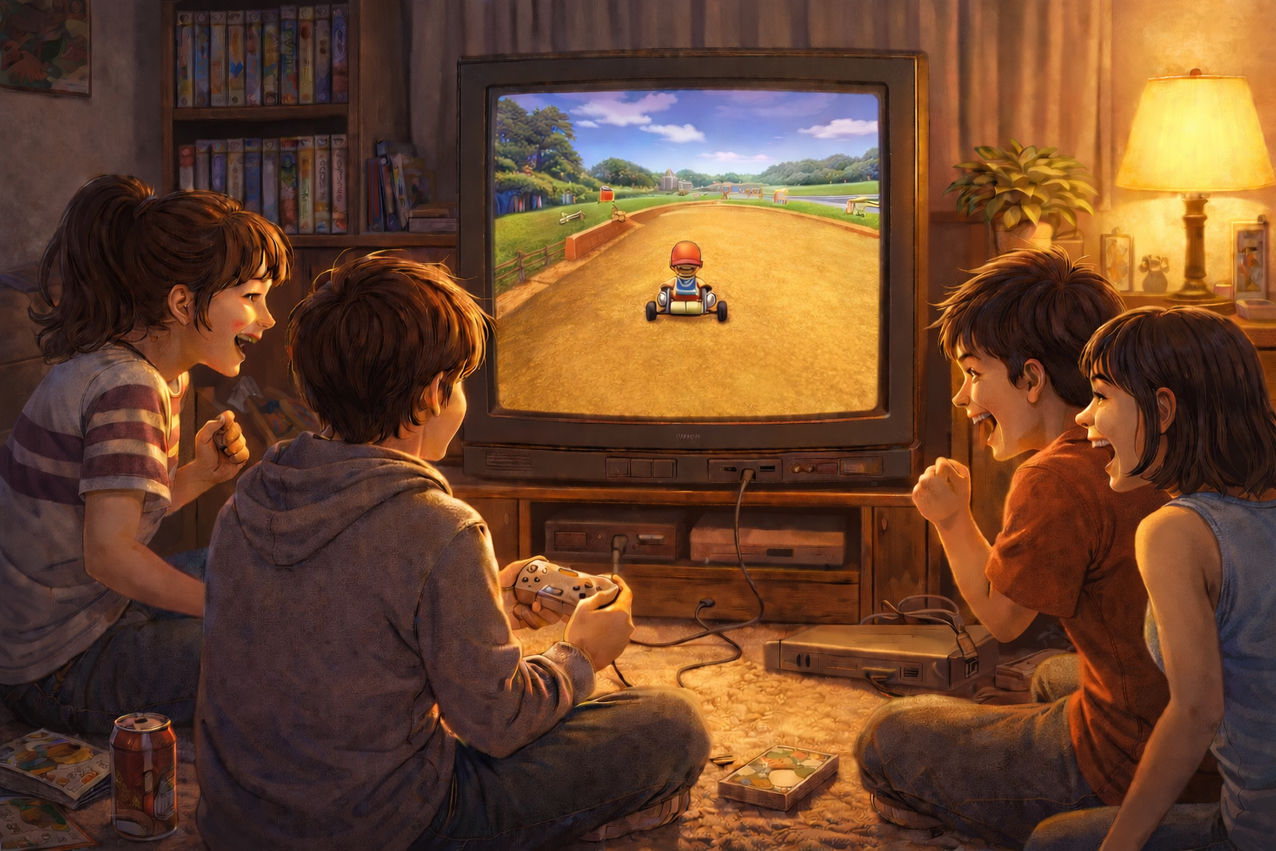
There was a time when buying a game meant something concrete.
A box on a shelf. A cartridge or disc that belonged to you. A memory tied to a physical object you could open again, anytime.
Today, most games aren’t “owned” in that way anymore.
They’ve become temporary access rights - digital licenses that can disappear as easily as they appeared.
That shift isn’t just about technology.
It quietly affects how we remember games - and how deeply they can stay with us.
What It Meant to Own a Game
When we bought a game in the past:
It lived on the shelf, not just a hard drive
It wasn’t tied to an always-online login
It didn’t expire when a server shut down
Your time, your memory, your emotional history with that game stayed yours.
There was an unspoken trust: As long as you kept the software, the experience was still accessible.
That mattered emotionally.
Now Games Can Vanish Overnight
Today, the majority of games - especially on phones or online platforms - are:
Downloaded, not owned
Tied to an account, not a box
Dependent on servers to exist
Gone when the service ends
In many cases, even content you “bought” can disappear without warning.
That fundamentally changes the relationship you have with the game.
It becomes less like your memory and more like a lease you’re renting.
Why This Matters to Emotional Memory
Think about the games you still feel.
What binds them to you most isn’t graphics or mechanics - it’s the emotional connection you had at that time in your life.
But when a game vanishes forever… That emotional anchor becomes harder to revisit.
The memory can remain - but the object of your memory does not.
That disconnect - between how games used to remain and how they exist now - is part of why nostalgia feels sharper, and loss feels deeper.
This Isn’t Just Progress. It’s a Cultural Shift
Game developers and platforms evolve for many reasons: technology, infrastructure, economics.
None of that is inherently bad.
But if games are truly cultural experiences, not just software packages, we need to rethink how we preserve them - emotionally and technically.
Players deserve to feel that something they invested time, money, and meaning into doesn’t simply disappear.
Games Should Be Vibes, Not Licenses
Play Your Vibe is here to remind us of this:
Games live in our memories, not just on our accounts.
And those memories deserve respect, permanence, and care.
We might not be able to bring back every offline title, but we can honor the emotional life they carried.
What’s a game you once owned that you still think about, even if it’s no longer playable?

Comments